The Global Recycled Standard (GRS) is a voluntary, third-party product standard used globally to verify recycled material content and ensure traceability across the supply chain. The Global Recycled Standard (GRS) was originally developed to provide a credible framework for recycled content verification across multiple industries. While the Global Recycled Standard (GRS) is often associated with textiles, GRS is increasingly relevant to plastic, paper, and packaging-related materials used in products sold into US and international markets.
For US companies navigating recycled content claims, retailer sustainability requirements, and supplier verification, the Global Recycled Standard (GRS) provides a recognized framework for chain-of-custody control and material integrity. As recycled content expectations increase, Global Recycled Standard (GRS) certification is frequently used to support supplier qualification and documentation.
What Is the Global Recycled Standard (GRS)?
Originally developed in 2008, the Global Recycled Standard (GRS) is designed to track and verify recycled input materials from the point of collection through processing, manufacturing, and final product distribution. The Global Recycled Standard (GRS) focuses on traceability rather than material testing, making it especially relevant for complex global supply chains.
The Global Recycled Standard (GRS) applies to products that contain at least 20% recycled content and evaluates compliance across five core areas:
- Recycled content verification under the Global Recycled Standard (GRS)
- Chain of custody and traceability
- Environmental management practices
- Social responsibility criteria
- Chemical restrictions defined by GRS
Unlike material testing standards, the Global Recycled Standard (GRS) relies on documentation, audits, and transaction records – not laboratory detection- to validate recycled content claims.
Scope of GRS Across the Supply Chain
Global Recycled Standard (GRS) certification covers the entire value chain, including:
- Collection and aggregation of recycled materials
- Processing and material conversion
- Manufacturing and packaging operations
- Product labeling, trading, and distribution
Each organization certified to the Global Recycled Standard (GRS) must maintain material segregation, mass balance controls, and documented traceability to preserve GRS certification integrity throughout the supply chain.

Why GRS Matters for US Market Access
While the Global Recycled Standard (GRS) is not a US regulation, it has become a de facto requirement for many global brands and retailers operating in North America. In practice, Global Recycled Standard (GRS) certification is often requested during supplier onboarding and sustainability audits.
Key drivers include:
- Brand sustainability commitments targeting recycled or preferred materials by 2025-2030
- Retail supplier requirements for third-party verification of recycled content claims
- Risk mitigation against unsubstantiated environmental claims under US enforcement frameworks
For packaging suppliers and product manufacturers, the Global Recycled Standard (GRS) often functions as buyer-required proof, not a marketing credential.
Practical note: Requirements vary by brand and retailer. Global Recycled Standard (GRS) is commonly requested but not universally mandated.
GRS Certification: How It Works
Upstream Certification Requirements
Any supplier providing recycled raw materials used in a GRS-certified product must also hold valid GRS certification. This includes recyclers, processors, and material compounders.
Traceability & Transaction Certificates
Because recycled content cannot be reliably verified through finished-product testing alone, GRS relies on:
- Self-declarations and material records
- On-site audits
- Transaction Certificates (TCs) documenting each transfer of certified material
Transaction Certificates are a critical control mechanism used by certification bodies to verify material flow and prevent double counting.
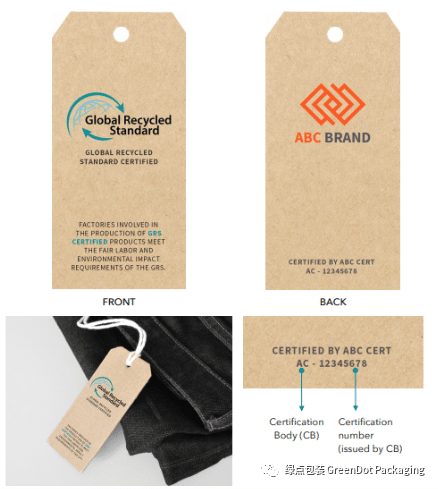
Labeling Thresholds Under GRS
- Minimum recycled content for certification: 20%
- Minimum recycled content to use the GRS logo on product labeling: 50%
Products below the labeling threshold may still be certified but cannot display the GRS mark.
Key Takeaways
At GreenDot, we support packaging teams in evaluating when GRS certification is appropriate, how it aligns with recycled content sourcing strategies, and how it interacts with US retailer requirements, material performance needs, and cost constraints. Our role is to translate certification frameworks into practical packaging decisions, not checkbox compliance.
- GRS is a voluntary but widely recognized recycled content and traceability standard
- Certification requires full supply chain participation, not just finished-product audits
- 20% recycled content qualifies a product for certification; 50% is required for labeling
- GRS is often buyer-driven, especially for global brands selling into the US
- It supports recycled content credibility but does not replace regulatory compliance
Next Steps for Packaging Teams
If recycled content is part of your packaging strategy, GRS should be evaluated early – before supplier selection, material qualification, or customer commitments are finalized. Understanding where GRS adds value, where it is commonly requested, and how it affects cost, traceability, and lead times can prevent downstream compliance gaps. Contact GreenDot today to review whether GRS certification makes sense for your packaging, suppliers, and customer requirements – and to build a compliant, practical recycled content strategy that holds up in real-world US retail environments.