

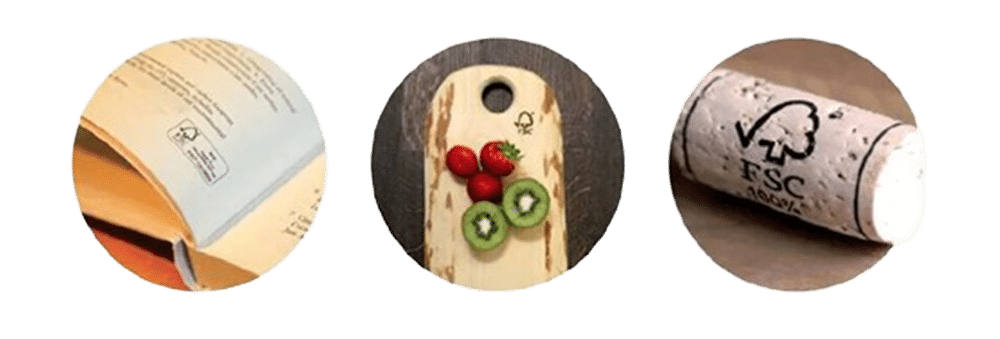
FSC certification, issued by the Forest Stewardship Council (FSC), is the global standard for identifying paper and packaging made from responsibly managed forests. Products that carry FSC labels or display the FSC logo verify that every step of the supply chain meets strict environmental, social, and economic criteria.

Founded in 1993, the FSC created independent standards for forest management and Chain of Custody (CoC) traceability, ensuring materials remain verifiable from forest to final product. Today, FSC certification is recognized worldwide as the benchmark for responsible forestry and sustainable packaging.
FSC Chain of Custody (CoC) certification is what connects responsible forestry practices to finished packaging. It verifies that materials from FSC-certified forests are tracked, documented, and kept separate from non-certified sources at every stage of production, from the forest to the final box.
In other words, while FSC Forest Management certification ensures that trees are harvested responsibly, FSC CoC certification ensures the integrity of that claim as materials move through the supply chain.
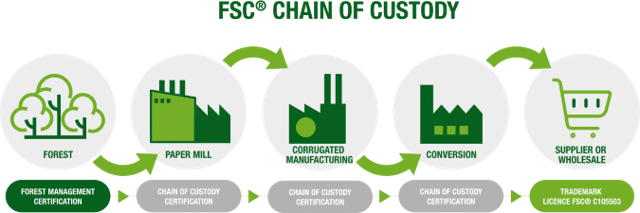
The CoC system follows each batch of certified material through these key stages:
For brands, this chain of documentation is what allows an FSC logo to appear on your packaging. Every entity that takes legal ownership or transforms the material must hold an active CoC certificate or be covered under a certified partner’s scope.
GreenDot Packaging holds full FSC Chain of Custody certification, allowing customers to:
💡 Tip: If your company doesn’t have its own FSC certification, you can still produce FSC-labeled packaging through GreenDot’s CoC. However, you’ll need a separate promotional license to use FSC trademarks in marketing or advertising.
FSC-certified materials are categorized by how their fibers are sourced and verified. Each FSC certification claim type – 100%, Recycled, or Mix – has different performance, cost, and sustainability implications depending on the end use.
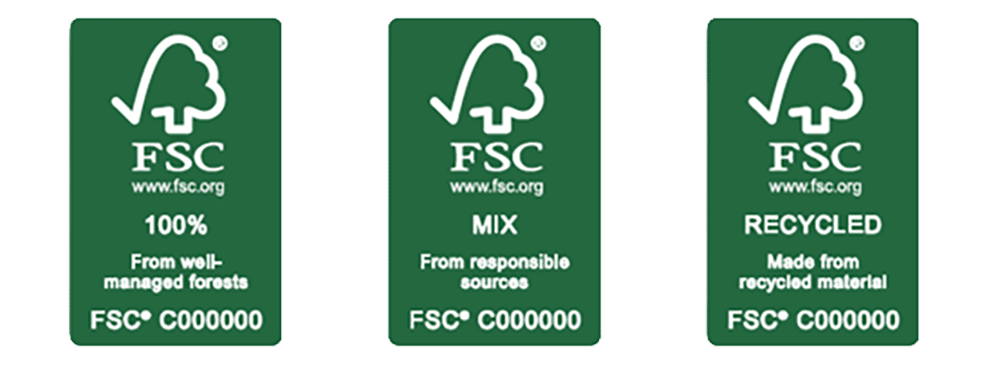
Made entirely from virgin wood pulp sourced from responsibly managed FSC-certified forests. This pulp contains long, strong fibers, providing superior mechanical strength and brightness.
Characteristics:
Common Uses:
Composed of 100% recycled fiber, this grade minimizes environmental impact but uses shorter fibers that reduce strength and surface uniformity.
Characteristics:
Common Uses:
Made from a combination of FSC 100%, FSC Recycled, and controlled wood (non-certified but verified to avoid illegal or controversial sources). It offers the best balance of strength, cost, and appearance for most packaging applications.
In a standard corrugated sheet, there are three layers:

This combination – FSC Mix for liners and FSC Recycled for the fluting – is the most common and practical structure for retail-ready and transport packaging. It meets strength and sustainability targets while maintaining competitive cost.
Characteristics:
Common Uses:
To display an FSC label legally, several design and formatting rules apply.
Each approved FSC label must include:
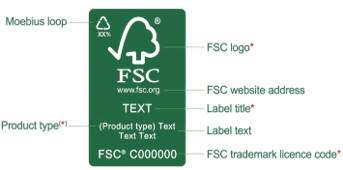
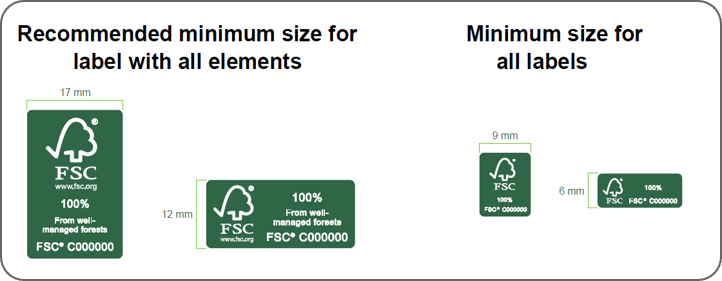
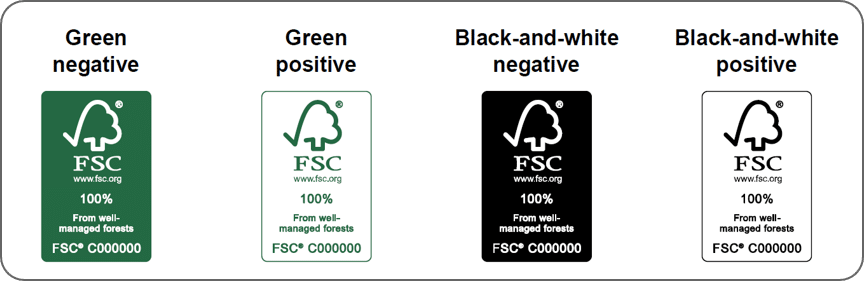
Consistent, correct usage preserves the credibility of your certification and avoids audit failures.
The FSC logo and related trademarks (e.g., the tree-checkmark symbol and “Forest For All Forever”) are protected assets governed by FSC’s trademark rules. Understanding where and how you can use them is critical to staying compliant.
If your product packaging uses FSC-certified materials, you may apply the appropriate FSC label (100%, Recycled, or Mix) once the artwork is reviewed and approved under your supplier’s Chain of Custody certificate.
Approval Process Overview:
At GreenDot, artwork approvals typically take 2–3 business days per SKU once submitted to FSC.
See the official FSC trademark use guide ›
Brands that want to reference FSC certification outside of packaging, such as on websites, brochures, catalogs, or social media, must hold an FSC Promotional License. This license ensures the messaging, imagery, and logo usage meet FSC’s communication standards.
If you’re not certified but purchase FSC-labeled packaging through GreenDot’s CoC, you can:
You may not:
Incorrect or unauthorized FSC certification logo use can result in compliance violations or suspended certification. Submitting your artwork through the FSC approval portal ensures:
💡 GreenDot helps clients prepare and submit FSC artwork for review, ensuring your label complies with current FSC guidelines before production.
Because FSC certification marks are globally recognized, counterfeit labels occasionally appear. Fortunately, all legitimate FSC-certified products are traceable to the source.
Each genuine FSC certification label includes a trademark license code (e.g., FSC® CXXXXXX). You can verify authenticity by entering this code on the official FSC certificate database to confirm:
If the code or company cannot be found, the label may be fraudulent or expired.
For packaging and print suppliers, FSC certification is more than a logo, it’s a global symbol of accountability and sustainability. Using FSC materials and labeling them correctly ensures your products align with retailer and brand expectations while protecting the world’s forests for future generations.
GreenDot Packaging holds full FSC Chain of Custody certification, ensuring every box, insert, and display can be traced to responsibly managed forests.
Whether you’re transitioning an existing product line or developing new sustainable packaging, our team helps you select FSC-certified materials, prepare approved artwork, and maintain full compliance with retailer and audit requirements.
Contact GreenDot to start your FSC certification transition today.